Last Updated: November 5, 2026
Quick Summary
Composite and PVC decking generally offer the longest-lasting performance with the least upkeep, since they resist rot, insects and moisture far better than untreated wood. Among wood, dense hardwoods like ipe are the most durable. Long lasting decks depend on the material matching your site’s climate, exposure and maintenance commitment.
- Composite and PVC resist rot, insects and moisture far better than untreated wood.
- Composite and PVC usually cost more per board than pressure-treated lumber upfront.
- Pressure-treated pine needs regular sealing and can warp or check as it dries.
- Ipe is a very dense hardwood that is extremely durable and hard to dent.
- Stainless steel or hot-dip galvanized fasteners are the standard defense on coastal decks.
Table of Contents
- Why Deck Material Decides How Long Your Deck Lasts
- Composite and PVC Decking: Lowest Upkeep, Highest Durability
- Wood Options: Pressure-Treated, Cedar, Redwood, and Ipe
- Best Decking Material for Wet Climates and Full Sun
- Deck Material Maintenance Requirements and Lifetime Cost
- Choosing a Deck Material for Your Property
- Frequently Asked Questions
Why Deck Material Decides How Long Your Deck Lasts
Your deck’s material sets the ceiling on how long-lasting decks can stand up to weather, foot traffic and time. Before you commit, it helps to check the wider exterior for other issues that can quietly affect your outdoor investment. A well-built frame can last decades, but the boards on top take the sun, rain, freeze-thaw cycles and daily wear.
Most decking falls into three families: wood, composite and PVC. Each has real strengths and tradeoffs, covered below.
Composite and PVC Decking: Lowest Upkeep, Highest Durability
Composite and PVC boards are often chosen by homeowners who want less maintenance. Composite blends wood fiber with plastic, while PVC is solid plastic.
The tradeoff is upfront cost: composite and PVC usually cost more per board than pressure-treated lumber, so the value case rests on the years you avoid staining, sealing and board replacement.
Composite can run hot in full sun and may show surface scratches; PVC tends to stay cooler. Ask about these differences before you commit.
Wood Options: Pressure-Treated, Cedar, Redwood, and Ipe
Wood remains popular because of its natural look and lower initial price. Each species behaves differently.
- Pressure-treated pine is the most common and affordable choice. It resists rot and insects through chemical treatment, but it needs regular sealing and can warp or check as it dries.
- Cedar is naturally resistant to decay and insects, and it weathers to a soft gray if left unsealed. It is softer than most hardwoods, so it dents more easily.
- Redwood offers similar natural resistance and a rich color. Availability and price depend heavily on region.
Wood decks reward owners who stay on top of maintenance. Skipping sealing or cleaning shortens the life of any wood species, even naturally durable ones.
Best Decking Material for Wet Climates and Full Sun
Climate is where decking marketing claims and real-world performance diverge most. Two decks built from the same board on the same day can age very differently depending on sun exposure, moisture, salt air, and freeze-thaw cycles. The material that lasts longest is the one whose failure modes match your site’s stressors.
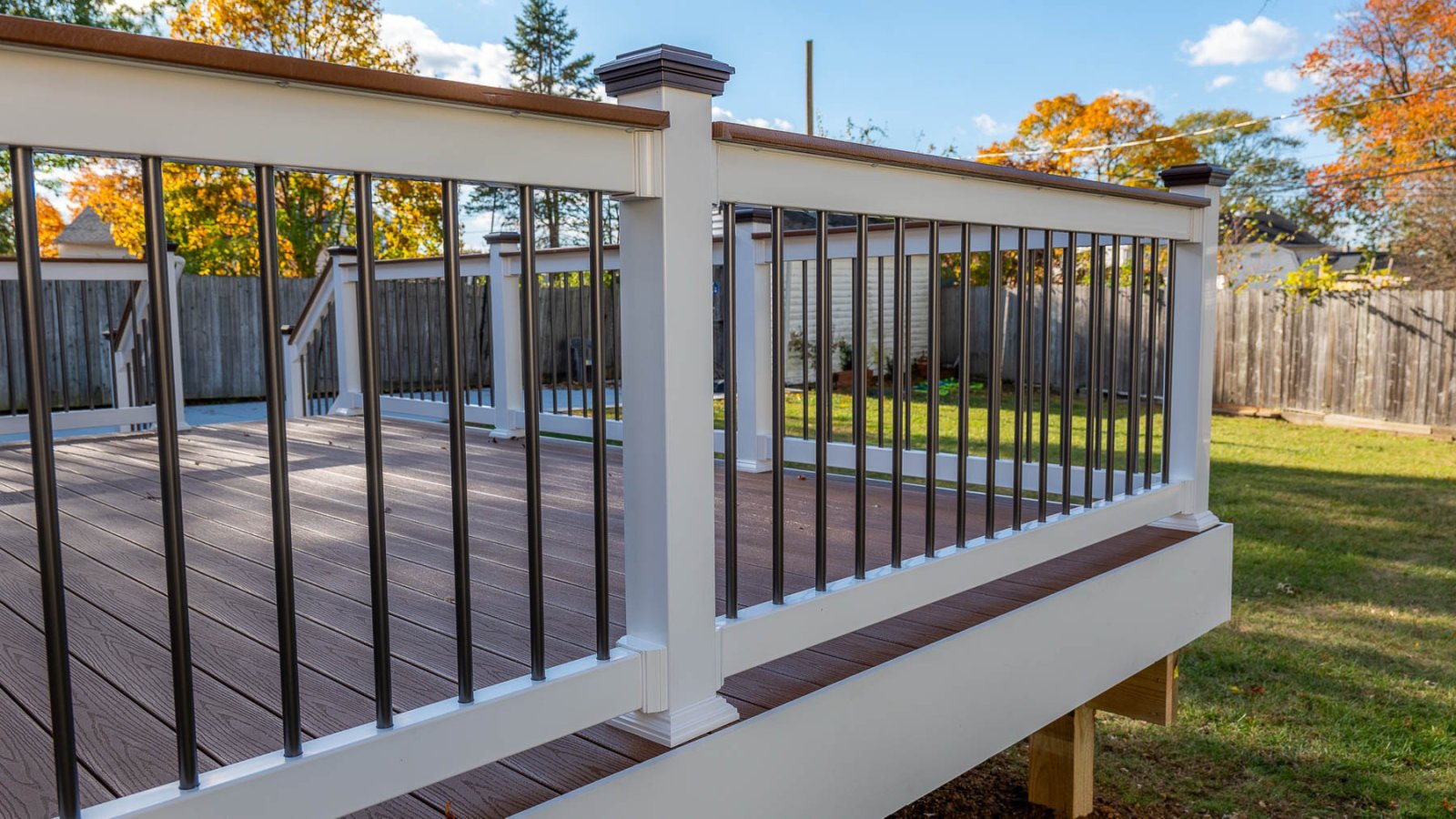
How moisture actually damages a deck
Wood fails from moisture in three predictable ways. Water absorbed into the board swells the fibers; as it dries it shrinks, and repeated cycles open checks and cracks along the grain that trap water and seed rot. End grain and cut edges absorb water fastest, which is why board ends and fastener holes soften first. Pressure-treated lumber slows this through chemical treatment, but treatment does not make wood waterproof, it still needs a protective finish and good drainage.
Composite boards blend wood fiber with plastic, so they absorb far less water than lumber, though early-generation composites could take on moisture at cut edges and poorly sealed butt joints. Modern capped composites wrap the board in a polymer shell that closes off the surface and edges. PVC is solid plastic through the board, so it does not absorb water at all.
Freeze-thaw cycles
Where temperatures swing above and below freezing repeatedly, water that gets into a board expands when it freezes. Wood handles this by cracking and checking; dense tropical hardwoods like ipe resist it better but are not immune. Composite and PVC are largely unaffected at the board level, the weak points move to the frame, fasteners, and drainage. A deck that holds standing water or snowmelt against the boards will shorten the life of any material.
Coastal salt air and humidity
Salt air accelerates corrosion of metal fasteners and hardware far more than it damages most board materials. Stainless steel or hot-dip galvanized fasteners are the standard defense on coastal decks, and skipping them is one of the most common reasons a deck fails early regardless of the boards.
Full sun, heat, and UV
Sun breaks down lignin in wood, which is why unfinished wood grays and develops surface checks; a penetrating oil or film finish slows that. Composite and PVC use UV stabilizers to resist color loss, but darker colors absorb more heat and can reach uncomfortable surface temperatures. Lighter colors stay cooler, and board color and manufacturer formulation matter more than the broad category.
Matching material to exposure
A practical way to decide is to rank your site’s stressors. A shaded, humid site with poor airflow punishes wood most and rewards PVC or capped composite.
Watch out: the most common climate-related deck failure is not the board at all, it is trapped moisture under and around the deck because of poor ventilation, no ground clearance, or fasteners that corrode before the boards do.
Deck Material Maintenance Requirements and Lifetime Cost
Upfront board price tells you almost nothing about what a deck costs to own. The useful comparison is total cost over the years you plan to keep the deck, purchase, installation, recurring maintenance, repairs, and eventual replacement, measured over a consistent horizon such as 20 or 30 years.
The four cost buckets
Every deck carries four kinds of cost, and each material distributes them differently:
- Purchase and installation. Material price per board plus labor, fasteners, and any special installation requirements. Dense hardwoods like ipe cost more to install because they require predrilling and specialized tooling.
- Recurring maintenance. Cleaning, sealing, staining, and oiling. Wood species need the most; composite and PVC the least.
- Repairs. Replacing damaged or rotted boards, refastening, and fixing the frame.
Comparing over a 20-year horizon
Rather than quote prices that vary by market and season, compare materials on the number of maintenance cycles each typically requires over 20 years and how repairable each is. A common pattern looks like this:
Material | Typical maintenance cadence | Repairability | End-of-life notes |
|---|---|---|---|
Pressure-treated pine | Clean and seal roughly every 1-2 years; more often in full sun or wet sites | Easy, boards are widely available and can be swapped individually | Untreated or treated wood may have disposal restrictions depending on local rules |
Cedar and redwood | Seal or stain every 1-3 years to hold color; can be left to gray with more frequent cleaning | Easy, standard lumber dimensions and fasteners | Wood is repairable and can often be reused or repurposed |
Ipe | Oil or clean periodically; very low decay risk | Harder, dense boards require predrilling and matching is difficult | Extremely long service life reduces replacement frequency |
Composite | Soap-and-water cleaning; no sealing required | Moderate, individual boards can usually be replaced, but color matching across production runs can be imperfect | Some manufacturers run take-back or recycling programs; check before disposal |
PVC | Soap-and-water cleaning; no sealing required | Moderate, replaceable boards, but color and profile matching depends on the manufacturer | PVC is recyclable in some streams but not universally accepted curbside |
The takeaway is not that one column wins. A board with a low purchase price and a high maintenance cadence can cost more to own over 20 years than a pricier board that needs almost no upkeep, and a material you can repair board-by-board avoids a full tear-out when one section fails.
Repairability is the underrated cost driver
A deck rarely fails all at once. One board rots at a post, a section gets gouged, or a stair tread cracks. The question is whether you can replace that board and match it. Pressure-treated pine and cedar are easiest to repair because standard dimensions are stocked everywhere and a new board weathers into the existing deck. Composite and PVC boards can usually be replaced individually, but color and profile matching across production years is the catch, manufacturers change colors and discontinue lines, so keeping spare boards from the original install is a practical hedge.
How to get a fair comparison from a contractor
Ask for a quote that separates material, labor, fasteners, and site prep so you can compare bids on the same basis. Then ask two questions most quotes do not answer: what maintenance will this material need over the next 20 years, and can individual boards be replaced later without tearing out the deck?
Watch out: a low bid that bundles material and labor into one number makes it easy to hide a cheaper board or thinner fasteners. Insist on a line-item quote so the material and the hardware are visible.
Choosing a Deck Material for Your Property
Start with three questions. How much maintenance are you willing to do? How much sun and moisture does the deck site get? What look do you want, and how long do you plan to stay in the home?
If you want minimal upkeep and expect long-term ownership, composite or PVC is usually the strongest fit. If budget and a natural look matter most, pressure-treated pine or cedar works well with a commitment to sealing.
Jannuzzio Group can walk you through these options for your specific yard, including how each material will hold up in your exposure. Our team can help with planning, material selection and installation.
Frequently Asked Questions
What is the longest lasting decking material?
Composite and PVC decking generally last the longest with the least upkeep, often lasting 25 years or more depending on the product and installation. Ipe, a dense tropical hardwood, is also very durable but needs regular oiling to keep its color and resist weathering. Pressure-treated wood is the most affordable option but typically needs more frequent sealing and board replacement. Warranties vary widely by manufacturer, so read the terms, including what voids coverage, before deciding.
Can a wood deck last 40 years?
A wood deck can last 40 years or more, but only with consistent care and good construction. Hardwoods like ipe and well-maintained cedar or redwood are the most likely to reach that age. Pressure-treated lumber can last decades when it is sealed regularly, kept clear of standing water, and built with proper spacing and flashing. Neglect, poor drainage, and fastener corrosion are the most common reasons wood decks fail early.
Which decking material performs best in wet climates?
Composite and PVC decking resist moisture absorption better than wood, so they handle rain and humidity well and are less prone to rot, swelling, and mold. Ipe also performs strongly in wet conditions because of its density. In a wet climate, whichever material you choose, make sure the deck has adequate airflow beneath it and that boards drain properly. Sealing or cleaning wood decks more often helps them tolerate frequent rain.
How do composite and wood decking compare for durability?
Composite decking resists rot, insects, and moisture by design, so its durability depends less on upkeep. Wood depends heavily on species, treatment, and maintenance. Cedar and redwood resist decay naturally but can splinter and weather to gray, while pressure-treated wood resists rot through chemical treatment but still needs sealing. Composite typically costs more up front, so compare lifetime cost, not just the initial price, when weighing the two.