Last Updated: November 7, 2026
Quick Summary
Booking fence installation in 2026 starts with a site visit, a written quote, a scheduled install date, and a final walkthrough. Before signing, ask for a line-item quote that covers posts, panels, concrete, gates, removal, and warranty terms so bids can be compared on the same scope.
- Write down fence height, material, run length, and gate count before calling contractors.
- Ask for a line-item quote and mark any missing line as not included rather than assuming it is covered.
- Ask for certificates for both general liability and workers’ compensation insurance.
- Request a written scope, a clear payment schedule, and lien waivers as payments are made.
- Prepare the yard by marking property lines and locating underground utilities before installation day.
Table of Contents
- How to Book Residential Fence Installation in 2026
- Questions to Ask Before Hiring a Fence Contractor
- Fence Installation Timeline: From Booking to Final Walkthrough
- Your Fence Installation Preparation Checklist
- Frequently Asked Questions
Booking a residential fence installation in 2026 starts with knowing what to ask before you sign anything. The steps below cover how to move from first call to finished fence with fewer surprises.
How to Book Residential Fence Installation in 2026
Most fence projects follow the same path: a site visit, a written quote, a scheduled install date, and a final walkthrough. If you are weighing whether to handle it yourself, read why fence installation is not a DIY project for most homeowners.
Start by deciding the basics: fence height, material, run length, and whether you want gates.
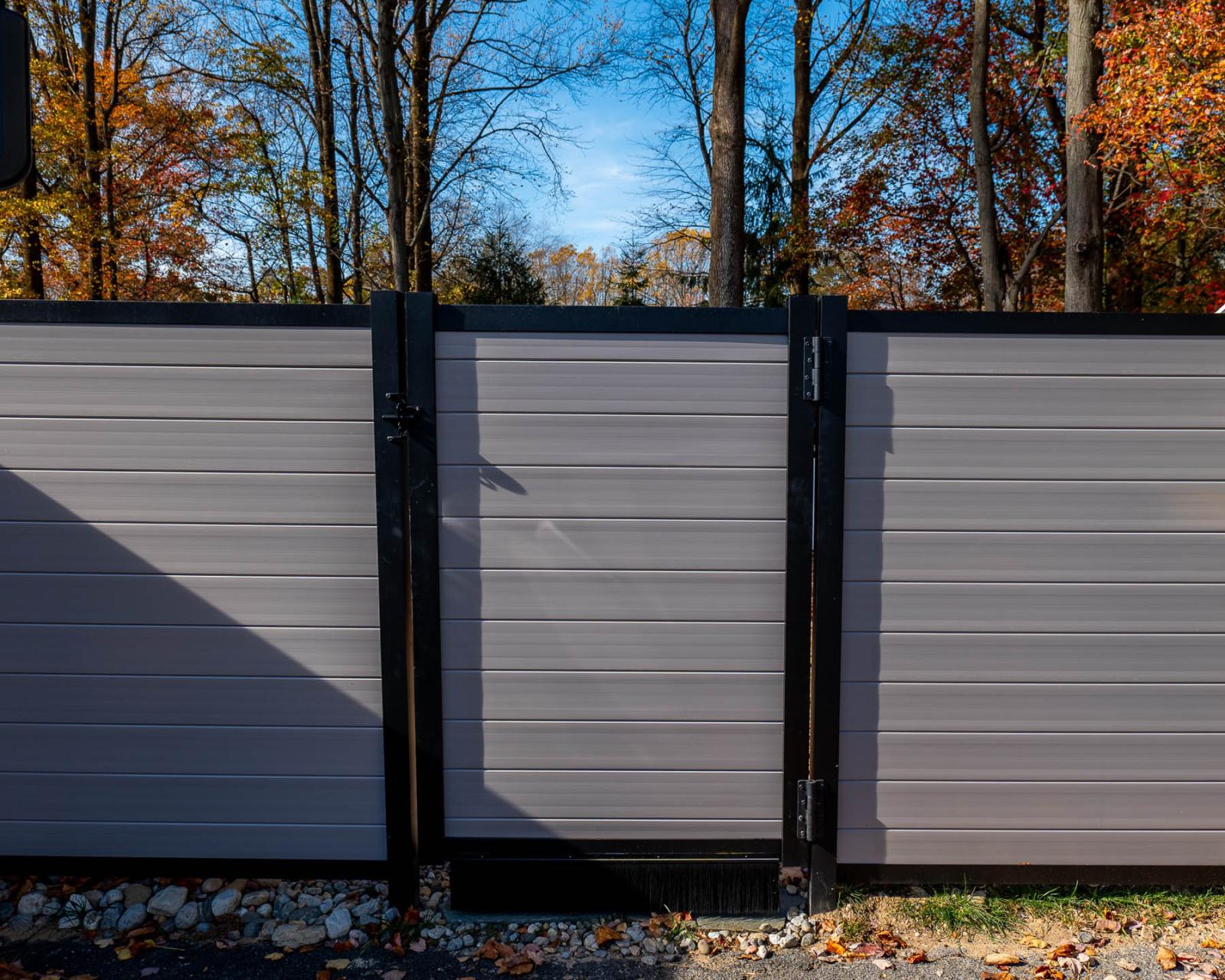
(/benefits-of-vinyl-fencing-compared-to-wood/) before you request pricing.
Watch out: a bid dramatically lower than the others usually reflects a thinner post, fewer rails, shallower post holes, or an excluded removal line, not a better deal.
Hidden costs to ask about directly
These are the charges that show up after the contract is signed if nobody raises them first:
- Gate additions. A gate is not a panel with hinges. It needs heavier posts, bracing, and hardware, and is commonly quoted as an add-on.
- Corner and end posts. These carry more load than line posts and sometimes require larger dimensions or deeper setting.
- Rock and difficult soil. In much of the region, post holes hit clay, fill dirt, or buried rock. Ask what happens when the auger cannot reach depth and who pays for the extra labor.
What a fair quote looks like in practice
A well-built estimate states the measurement basis, lists materials with grade and dimensions, separates labor from materials, names the exclusions, attaches warranty terms, and states how long the price is valid, lumber and vinyl pricing moves with the market.
Request an estimate and ask for the line-item version, the one you can actually put in a spreadsheet.
Once you have several quotes, the line items below show what each one should cover so you can compare them on the same basis.
Line item | What to confirm | Why it matters |
|---|---|---|
Posts | Quantity, spacing, material, embedment depth | Drives wind resistance and how long the fence stays plumb |
Panels or pickets | Material grade, thickness or gauge, height | Sets the fence’s durability and appearance |
Concrete | Included or billed separately, per hole | Often excluded from low bids |
Gates | Count, width, hardware, self-closing hardware | Gates need heavier posts and bracing than panels |
Removal and disposal | Tear-out, haul-away, dumpster fees | Frequently left out of base pricing |
Warranty | Material and workmanship terms, what voids them | Separates the two warranties so you know who covers what |
Questions to Ask Before Hiring a Fence Contractor
Questions are only half of the vetting process. Our guide to choosing a qualified residential fence contractor walks through what to look for in a company. The other half is asking for documents and knowing what a correct one looks like. Below are the questions worth asking, paired with what to verify before any deposit changes hands.
Licensing and registration
Ask: “Are you licensed and registered to do this work in my state, and can you send me the number?”
Then verify it yourself rather than taking the number on faith.
Watch out: a license number that belongs to a different business entity, or a company operating under a trade name that does not appear in the lookup, is a reason to slow down.
Insurance: two certificates, not one
Ask: “Can you send me a certificate of insurance for both general liability and workers’ compensation?”
These cover different things and you need both. General liability covers damage to your property, a truck through the lawn, a dropped post through a window. Workers’ compensation covers injuries to the crew while they are on your property.
When the certificate arrives, check three things: the named insured matches the contracting company, the policy is currently in force, and the coverage limits are stated. Ask to be listed as an additional insured for the duration of the project if offered, and request an updated certificate if the start date is more than a few weeks out.
Written scope and change orders
Ask: “Will the contract state the exact scope, and how are changes handled once work starts?”
A written scope should name the material, dimensions, footage, gate count, and exclusions. It should also describe the change-order process: who authorizes a change, whether it is priced before work proceeds, and how it is documented.
Payment terms and lien protection
Ask: “What is the payment schedule, and will you provide a lien waiver as payments are made?”
A common and reasonable structure is a modest deposit to schedule materials, a progress payment, and the balance due after the final walkthrough. Be cautious with any request for the full amount up front.
Warranty terms in writing
Ask: “What does the workmanship warranty cover, how long does it last, and what voids it?”
Workmanship and material warranties are separate. The material warranty comes from the manufacturer and typically covers product defects; the workmanship warranty comes from the installer and covers how it was put in the ground. To understand what residential fence repair warranty coverage should include, review our detailed guide.
References and past work
Ask: “Can you give me two or three recent customers in my area I can call, and may I see a completed installation?”
Call the references and ask specific questions: did the crew show up when promised, was the final invoice the same as the quote, and did the company come back when something needed adjusting?
Crews, scheduling, and point of contact
Ask: “Do you use your own crews or subcontractors, are field employees background-checked, and who is my single point of contact?”
If you have children or pets, the background-check question matters. The point-of-contact question matters for a different reason: when weather pushes a date or a material shipment slips, you want one named person who answers, not a general office line.
What to do with the answers
Score each company against the same list. A contractor who supplies the license number, both insurance certificates, a written scope, a clear payment schedule, and warranty terms without being pushed is telling you how the whole project will run. Jannuzzio Group stands behind every installation with a workmanship warranty.
Fence Installation Timeline: From Booking to Final Walkthrough
Most homeowners find the timeline easier to plan when they see the stages laid out:
- Initial contact and site visit. The contractor reviews your property, measures the run, and notes obstacles such as slopes, utility lines, or existing structures.
- Written quote. You receive line-item pricing, material specifications, and the warranty summary.
- Scheduling. Once you approve the quote, the install date is booked. Lead times vary with season and material availability.
- Installation day. Most residential projects are completed in a single day, though larger or custom runs may take longer.
- Final walkthrough. Inspect gate alignment, post plumb, panel fit, and cleanup before you sign off.
Plan for a short delay if weather turns, since wet ground can affect post setting. Confirm how the contractor handles rescheduling before you book.
Your Fence Installation Preparation Checklist
Preparing your yard before the crew arrives keeps the day moving:
- Mark property lines or confirm where your survey pins are located
- Clear the fence line of toys, planters, and garden hoses
- Locate underground utilities and let the contractor know about any sprinkler lines
Checking with your local municipality about permit requirements and your HOA about approved fence styles can prevent costly changes after installation.
Ready to get started? Request a free estimate from Jannuzzio Group and receive a clear, itemized quote for your fence project.
Frequently Asked Questions
How do I book residential fence installation?
Start by requesting a free estimate through Jannuzzio Group’s website or by phone. Have your property address, a rough sketch of the area to be fenced, your preferred material, and any gates you need ready. A site visit usually comes first so the installer can measure, check the ground, and confirm the layout. Once you approve the written quote, the crew schedules a date. Ask for the expected start date and the estimated completion window before you sign.
Do I need to check property lines before installing a fence?
Yes. Confirm where your boundary sits before any post goes in the ground. Your deed, a recent survey, or the plat map from your county records office are the most reliable sources. Placing a fence on a neighbor’s land can lead to a forced removal and a dispute, so it is worth doing this step first. Tell your installer where you believe the line is, and ask them to flag the posts against the survey before digging begins.
Do I need a permit to install a residential fence?
Many municipalities and some homeowner associations require a permit or written approval for a new fence, especially for height limits, setbacks from the street, or pool enclosures. Requirements vary by county and town, so check with your local building or zoning office before booking. Ask your fence contractor whether they will handle the permit application or whether you need to file it yourself. Build the permit timeline into your overall schedule.
How long does residential fence installation take?
Most standard residential fences are installed in one day, though larger yards, custom wood designs, or gate work can extend the job. Weather, the ground condition, and permit timing can also affect the schedule. Ask for a projected start date and completion window in your quote. A reputable installer will also tell you what could change that timeline, so you are not surprised by delays.