
Quick Summary
A privacy fence is a residential fence designed to block sightlines between your yard and neighbors, streets or other views. The best choice depends on how much screening you need, how much maintenance you want to take on, and how the fence fits your house and yard. Board-on-board wood fences give near-complete privacy, while vinyl offers strong screening with low upkeep.
- Board-on-board fences overlap each board, so no gaps show from either side.
- Vinyl resists rot and insects and needs only occasional washing.
- Wood fences require regular staining or sealing to perform well.
- Spend on posts, rails and gate hardware, and simplify decorative surface details.
- Call 811 before digging so underground utilities can be marked.
Table of Contents
- Why Privacy Fence Design Matters Before You Pick a Style
- Simple Privacy Fence Ideas for Residential Homes
- Materials Compared: Wood, Vinyl, Metal and Composite
- Modern and Contemporary Privacy Fence Designs
- Inexpensive Privacy Fence Ideas That Still Deliver Privacy
- DIY Privacy Fence Ideas for Residential Homes
- Privacy Fence Landscaping Ideas to Soften the Line
- Zoning, Property Lines and Climate Factors to Check First
- Choosing Your Privacy Fence With Jannuzzio Group
- Frequently Asked Questions
Why Privacy Fence Design Matters Before You Pick a Style
Choosing a privacy fence is about more than blocking the neighbors. The design you pick affects how much light reaches your yard, how the fence holds up over time, and how it looks from the street.
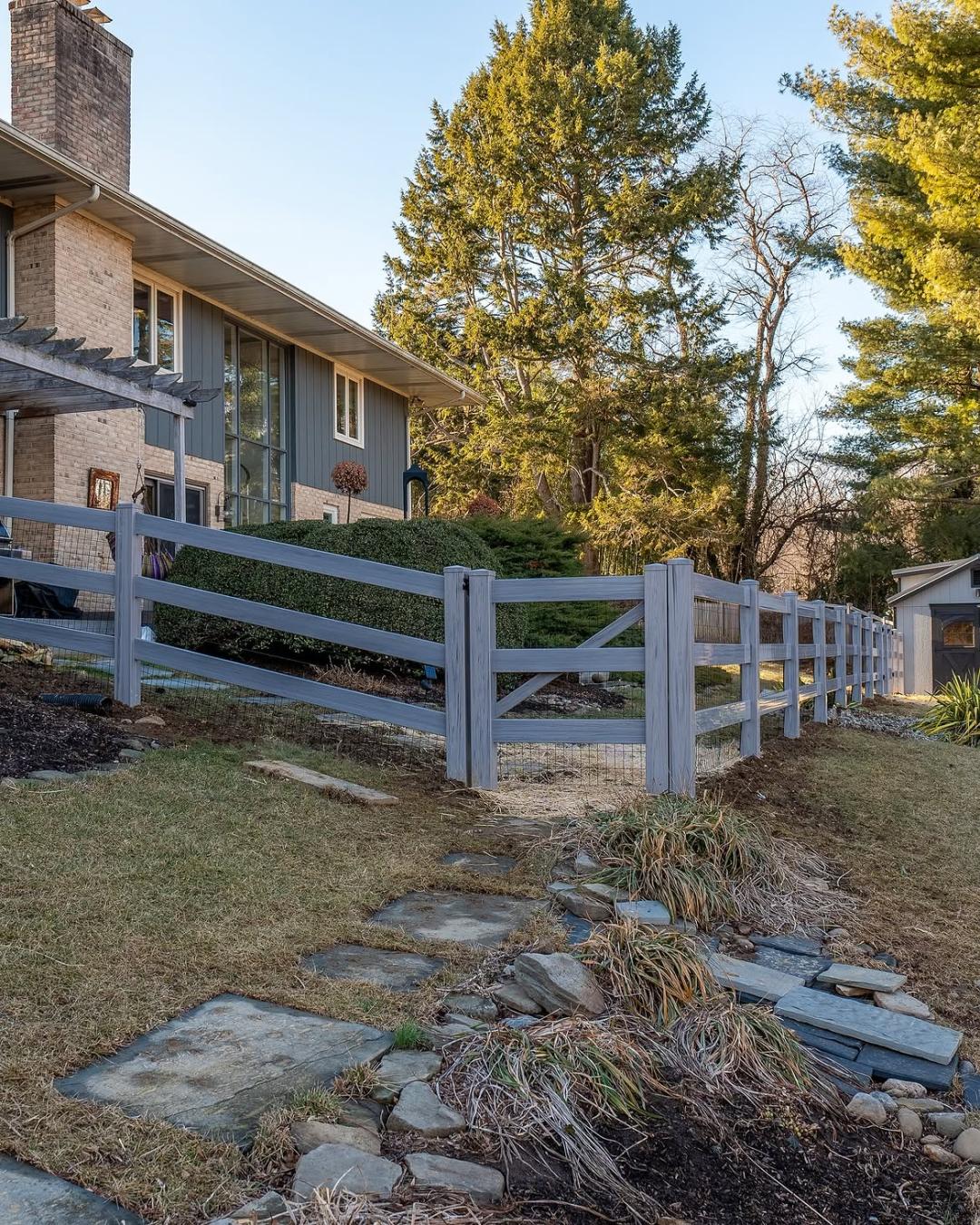
When planning a fence, start with three questions: what you need the fence to do, how much maintenance you want to take on, and what the house and yard already look like. Those answers narrow the field faster than any inspiration gallery. A pet owner with a large backyard has different needs than a family that wants a quiet patio tucked away from a busy street.
Privacy comes in degrees. A fully solid panel blocks sightlines completely but also traps wind and can strain posts in open areas. Spaced boards let some air and light through while still hiding a seating area or hot tub. Understanding that trade-off first makes every design below easier to judge.
Simple Privacy Fence Ideas for Residential Homes
Simple designs are often the most practical choice for a residential yard. They use fewer parts, go up faster, and are easier to repair when a single panel is damaged. Two designs stand out for most suburban lots.
Horizontal Board Fences
Horizontal boards give a clean, modern look and make a yard feel wider. Running boards side to side draws the eye across the length of the fence, which suits long, narrow lots. Installers typically use a frame of pressure-treated posts and rails, with boards fastened to the outside. Because the rails carry more of the structural load, these fences need sturdy posts set at proper depth.
The main trade-off is maintenance. Horizontal boards shed water less easily than vertical slats, so sealing and staining on a regular schedule matters more. Without it, boards can cup or split near the rails.
Board-on-Board Wood Fences
Board-on-board fences overlap each board with the next, so no gaps show from either side. That gives you near-complete privacy while still allowing some airflow, since the overlap is usually a small set width. It is one of the most popular privacy designs in the Mid-Atlantic and is a good match for homes where neighbors sit close together.
Board-on-board fences typically cost more than a standard single-layer fence because the extra boards add material and labor. The finished look is solid and traditional, and it pairs well with brick or stone homes.
Materials Compared: Wood, Vinyl, Metal and Composite
The material you choose affects upkeep, lifespan and appearance more than almost any other decision. Here is how the common options compare for a typical privacy fence.
| Material | Upkeep | Durability | Privacy Fit | Best For |
|---|---|---|---|---|
| Wood (cedar or pressure-treated) | Regular staining or sealing | Good with maintenance | Excellent | Traditional look, custom designs |
| Vinyl | Occasional washing | Strong, resists rot | Excellent | Low-maintenance homeowners |
| Aluminum or metal | Minimal | Strong, can rust if scratched | Good to excellent with panels | Modern designs, open layouts |
| Composite | Low | Resists rot and insects | Good | Blend of wood look and lower upkeep |
Vinyl fencing is a common choice for homeowners who don’t want to stain every year.
Wood remains the most flexible material. You can choose cedar for its natural resistance to decay, or pressure-treated lumber for a lower starting cost.
Aluminum works well for modern designs with decorative inserts. It is lighter than wood and does not rot, but it can dent and scratches may invite corrosion over time.
Modern and Contemporary Privacy Fence Designs
Modern fence designs focus on clean lines, uniform spacing and a restrained palette. They suit contemporary homes and yards that double as outdoor living spaces. Black-framed aluminum panels, horizontal slats and mixed-material designs are common choices right now.
Hybrid fences combine materials, such as a wood panel with a metal frame or a masonry base with aluminum infill.
Decorative top caps and framed panels add visual detail without much extra cost. A simple cap can make a standard board fence look more finished.
Inexpensive Privacy Fence Ideas That Still Deliver Privacy
Budget is where most privacy fence plans fall apart. Inspiration galleries show the finished look but rarely explain which choices drive the invoice. The good news is that privacy is not a single product, it is a set of decisions, and you can trade cost against coverage, lifespan, and maintenance without giving up the screening you actually need.
Where the money actually goes
On a typical residential privacy fence, the largest line items are posts and concrete, panels or pickets, rails, gates, and labor. Posts and gates are the two places where cutting corners shows up fastest: undersized posts lean, and cheap gate hardware sags within a season or two. A practical rule is to spend on structure (posts, rails, gate frames, hinges) and simplify on the surface (picket profile, cap style, decorative trim).
Budget tiers by approach
Think in tiers rather than exact numbers, because installed pricing swings with height, linear footage, site access, and slope.
- Lowest upfront: pressure-treated pine pickets with dog-ear tops, standard rails, and a single coat of sealer. It screens well and is easy to repair panel by panel, but expect to reseal every couple of years and to see some warping and checking over time.
- Mid tier: cedar pickets or a board-on-board layout in pressure-treated pine. Cedar resists decay and insects better than pine and holds stain longer, while board-on-board adds overlap for near-total sightline blocking without a premium panel.
- Higher upfront, lower ongoing: vinyl or composite panels. The sticker is higher, but you trade annual staining for occasional washing, and the color holds without refinishing.
Cheaper ways to gain real privacy
- Fence only the exposed run. Build full-height solid panels along the side that faces a neighbor’s deck or a busy street, and use a lower or open design along the back where sightlines are already blocked by trees or grade.
- Add a topper instead of a taller fence. Lattice or slat toppers on an existing fence raise the visual screen without replacing the whole structure, but check height limits first, since a topper still counts toward total fence height in most codes.
- Use secondary screening for short-term needs. Bamboo rolls, reed fencing, and fabric screens are inexpensive and quick, and they work well for a rental, a temporary gap, or a hot tub corner. They generally last only a few seasons outdoors and are not a substitute for a structural fence.
- Plant a living screen. A row of arborvitae or holly costs less than a long fence run and softens the yard, though it takes several years to reach screening height and needs space from the property line.
Upfront price versus lifetime cost
The cheapest fence is rarely the least expensive fence. A low-cost pine fence that needs resealing every two years and partial replacement after a decade can cost more over fifteen years than a vinyl or composite fence that only needs washing.
Watch out: a quote that is dramatically lower than the others usually reflects thinner posts, fewer rails, shallower post depth, or no permit handling, ask what is excluded before you sign.
Stretch the budget without stretching the fence
- Keep the layout simple: straight runs and square corners cost less than curves, angles, and custom heights.
- Standard panel widths and stock picket profiles cost less than custom milling.
- One well-placed gate costs less than two, and it is easier to secure.
- Stage the project: build the structural fence now and add landscaping, toppers, or a second gate in a later season.
A written quote for your yard can help you compare these trade-offs side by side.
DIY Privacy Fence Ideas for Residential Homes
Some homeowners want to build their own privacy fence. A simple DIY project is possible, but it takes planning and physical work.
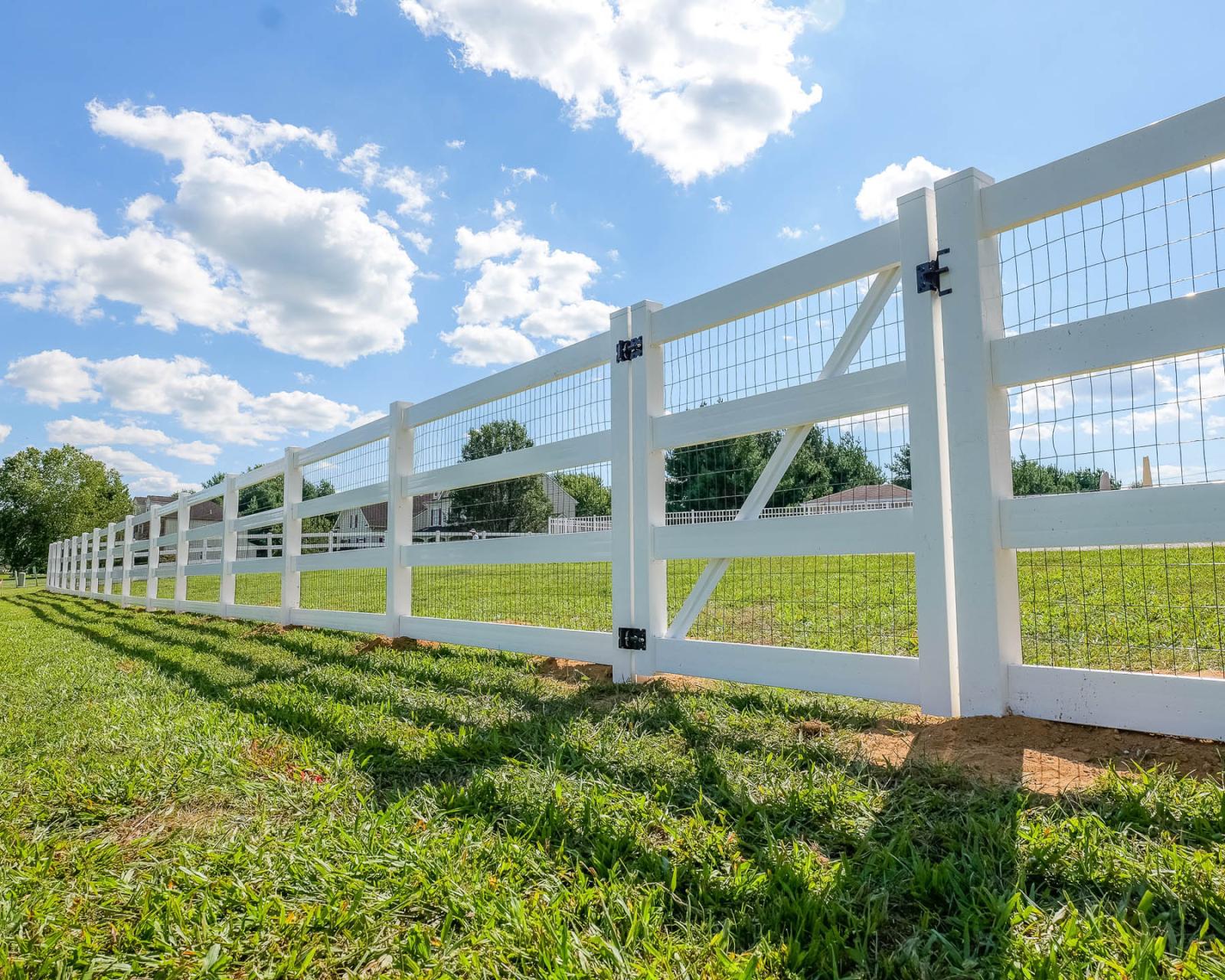
A basic DIY design uses pressure-treated posts set in concrete, with horizontal rails and pre-cut cedar pickets or panels. Pre-built panels are the easiest route, because they reduce the cutting and alignment work.
Be realistic about the risks. Digging post holes, lifting heavy panels and working around utility lines are common sources of injury and damage. Call 811 before any digging so underground utilities can be marked (811 Before You Dig).
Privacy Fence Landscaping Ideas to Soften the Line
A privacy fence can look stark on its own. Landscaping softens the line and makes the fence feel like part of the yard.
Evergreen shrubs such as arborvitae or holly provide year-round screening and pair well with wood or vinyl. Ornamental grasses and perennials add seasonal color in front of a solid fence.
Keep plantings a few feet from the fence so roots and foliage do not trap moisture against the boards. Good spacing protects the fence and keeps the plants healthy.
Zoning, Property Lines and Climate Factors to Check First
Most fence guides stop at style. The decisions that actually determine whether a privacy fence works, and whether it survives inspection and weather, happen before a single post is set. This section covers the planning questions that inspiration galleries skip.
Privacy level versus airflow: pick your point on the scale
Privacy is not on or off. It is a scale, and each step changes how the yard feels and how the fence performs in wind.
- Fully opaque (board-on-board, solid vinyl, masonry): blocks sightlines completely, but it also blocks wind. On an exposed lot or a coastal property, a solid panel acts like a sail, so posts must be deeper and rails heavier. Expect a more enclosed feel and less passive cooling in summer.
- Mostly opaque with small gaps (standard picket with tight spacing): hides seating areas and hot tubs from most angles while letting some air move through. Gaps still allow glimpses at eye level, so check the view from a neighbor’s deck, not just your own.
- Partial screening (spaced slats, horizontal boards with gaps, lattice): preserves light and airflow and looks lighter from the street, but it will not fully block a second-story window or a sloped neighbor’s view.
- Open with screening elements (metal frames with inserts, trellis panels): best for curb appeal and modern designs, weakest for true privacy.
A common pattern is to mix levels along one fence line: solid panels at the patio, spaced slats along the side yard, and an open section at the front. That gives privacy where it matters and keeps the yard from feeling walled in.
Slopes, drainage, and uneven ground
Sloped yards are where fence plans most often go wrong. There are two standard approaches:
- Stepped: panels stay level and step down the hill in increments. It looks tidy and is easier to build, but the bottom of each panel can leave triangular gaps on steep grades.
- Racked: panels follow the grade, so the top and bottom rails run parallel to the slope. It closes the gaps but requires more careful layout and can look less uniform on very uneven ground.
Drainage matters as much as grade. Leave a small gap between the bottom of the fence and the ground so water and air can move, and avoid trapping soil or mulch against the boards. On low spots, plan how stormwater will flow before the posts go in, a fence that dams water will rot at the base and undermine the posts.
Gates, access, and security
Plan gates before you plan panels. A gate is the heaviest moving part of the fence, and its placement affects both daily use and security.
- Put the main gate where you actually walk, usually near the driveway or the side of the house, and size it for what has to pass through: a mower, a wheelbarrow, a trash bin.
- Use a self-closing hinge and a latch rated for outdoor use; cheap hardware is the most common gate failure.
- Consider visibility: a solid gate gives privacy, but a gate with a small window or slat gap lets you see who is at the door before you open it.
- If the yard has a pool, check the applicable pool barrier requirements with your local building authority, as many jurisdictions set rules for self-latching gates and barrier heights.
Local rules to confirm before you build
Fence rules vary by municipality, county, and HOA, so confirm the specifics for your address rather than assuming. The items to check:
- Height limits, which are often lower in front yards than in back yards, and which usually count toppers and lattice toward total height.
- Permit requirements, which may apply above a certain height or for certain materials.
- Setbacks from property lines, sidewalks, and easements.
- HOA design standards, which can dictate material, color, and style even when the municipality allows more.
Confirm your property lines with a current survey or the recorded plat before installation. A fence on the wrong side of the line can mean costly removal, and utility easements can restrict where posts may go.
Climate and site conditions
Humidity, heavy rain, coastal salt air, and freeze-thaw cycles all affect how a fence ages. Wood needs sealing to resist moisture and should be set on posts deep enough to resist frost heave. Metal should be coated or galvanized to resist corrosion, especially near the coast. Vinyl and composite handle moisture well but still depend on solid post installation to withstand wind.
Reviewing zoning, property-line, and site questions before design begins helps ensure the fence you choose is one you can actually build.
Choosing Your Privacy Fence With Jannuzzio Group
Choosing the right privacy fence comes down to matching the design to your goals, your yard and your budget. If you are weighing options, a clear plan makes the decision easier.
Jannuzzio Group is licensed and fully insured in Delaware, Pennsylvania, New Jersey and Maryland. Our field crews are background-checked and drug-tested, and most projects are completed in a single day. Every installation carries a workmanship warranty.
Ready to see which privacy fence fits your home? Request a free estimate from Jannuzzio Group to get a written quote tailored to your property.
Frequently Asked Questions
What is the most attractive privacy fence?
Attractiveness depends on the house style and the yard, but board-on-board cedar and horizontal-slat designs in a neutral finish are among the most widely chosen. Wood gives a natural look that can be stained to match trim, while aluminum with decorative inserts suits a more contemporary home. Consider how the fence will look from the street side as well as from the yard, since the finished side facing neighbors matters for curb appeal. Ask for a sample panel or photos of installed examples before committing to a design.
What is the cheapest way to build a privacy fence at home?
The lowest-cost route is usually a basic wood fence with standard pickets or panels, or a DIY build using a simple board layout. Bamboo roll screens and attached privacy screening can add cover at a lower initial cost, though they generally last less time than a built fence. Material and labor costs vary with fence length, height, site conditions and local prices, so compare written quotes rather than relying on general estimates. Jannuzzio Group can provide a current quote for your specific yard.
Which fence materials provide the most privacy?
Solid-panel and board-on-board designs provide the most visual privacy because they block sightlines between boards. Vinyl panels and composite materials also give consistent coverage with no gaps, which many homeowners prefer for a finished look. Horizontal boards with narrow spacing offer good privacy with a more modern appearance. Open-slat or spaced-picket designs allow more airflow and light but offer less screening, so choose based on how much visibility you want to block.
Can plants add privacy along an existing fence?
Yes. Evergreen shrubs, tall grasses and climbing plants can soften a fence and add a layer of screening, particularly along the outside of an existing fence line. Plant choices should match your sun exposure, soil and the mature height you want. Plants take time to fill in, so they work best as a complement to a fence rather than a replacement. Keep plant roots and growth away from the fence posts to limit damage over time.